

Playing card material engineering
How Art Nouveau Playing Cards Are Engineered for Print and Handling
Ornate card artwork has to work with the material beneath it. This production example uses 300 gsm C2S paper, double-sided linen embossing, matte varnish, a black-core ink layer and a finished size of 63 × 88 mm. Each choice changes how the illustrations print, feel and perform in the hand.

Direct answer
Why this construction works for ornate Art Nouveau artwork
The 300 gsm C2S paper provides the specified basis weight and coated printing surfaces on both sides. Linen embossing adds a woven tactile pattern to both card faces, while matte varnish controls broad reflections and protects the printed surface. The specified black-core ink layer improves opacity and reduces front-to-back show-through. At 63 × 88 mm, the deck uses a familiar poker-size footprint for indices, portraits and ornamental borders.
These elements do different jobs, so they should not be reduced to a single “premium finish” label. The printed sheet, embossing, varnish, opacity treatment and final cut need to be reviewed together on a finished sample.

Artwork-to-card translation
Reading the Art Nouveau visual language before production
The photographed cards use the visual vocabulary commonly associated with Alphonse Mucha and Art Nouveau: graceful female figures, flowing hair and garments, flowers, organic curves, circular framing and a subdued yet distinctive palette. On a playing card, these elements become a prepress challenge because fine contour lines and pale tonal transitions must remain legible at a compact scale.
The confirmed construction
Five confirmed specifications, five production decisions
Treating the build as one vague “premium finish” hides the engineering choices that matter. Evaluate each confirmed parameter below for its own contribution, then review it again as part of the finished card.
300 gsm C2S paper
This is the confirmed paper for the deck. The 300 gsm figure states its basis weight, while C2S identifies coated surfaces on both sides. Exact caliper, stiffness and flex should be approved on the finished card rather than inferred from basis weight alone.
Double-sided linen embossing
A linen pattern is embossed onto both faces of the card to create a cloth-like texture and a more tactile handling surface. Fine contours, small indices and pale tonal transitions should be reviewed after embossing because the texture changes how light moves across the artwork.
Matte varnish
Matte varnish reduces broad glare and adds a protective layer over the printed surface. It helps limit everyday handling scuffs, but without test data for the finished card it should not be described as scratch-proof, waterproof or fingerprint-proof.
Black-core ink layer
The specified black-core ink treatment improves opacity and reduces the visibility of artwork from the opposite face. Its performance should be checked on a finished sample under strong light rather than assumed from the paper weight.
63 × 88 mm poker size
This familiar poker-size format provides balanced proportions for card faces, indices and illustrated borders, but it is not the mathematical golden ratio. Check sleeve, insert and box fit against their internal dimensions rather than assuming compatibility from the nominal card size.
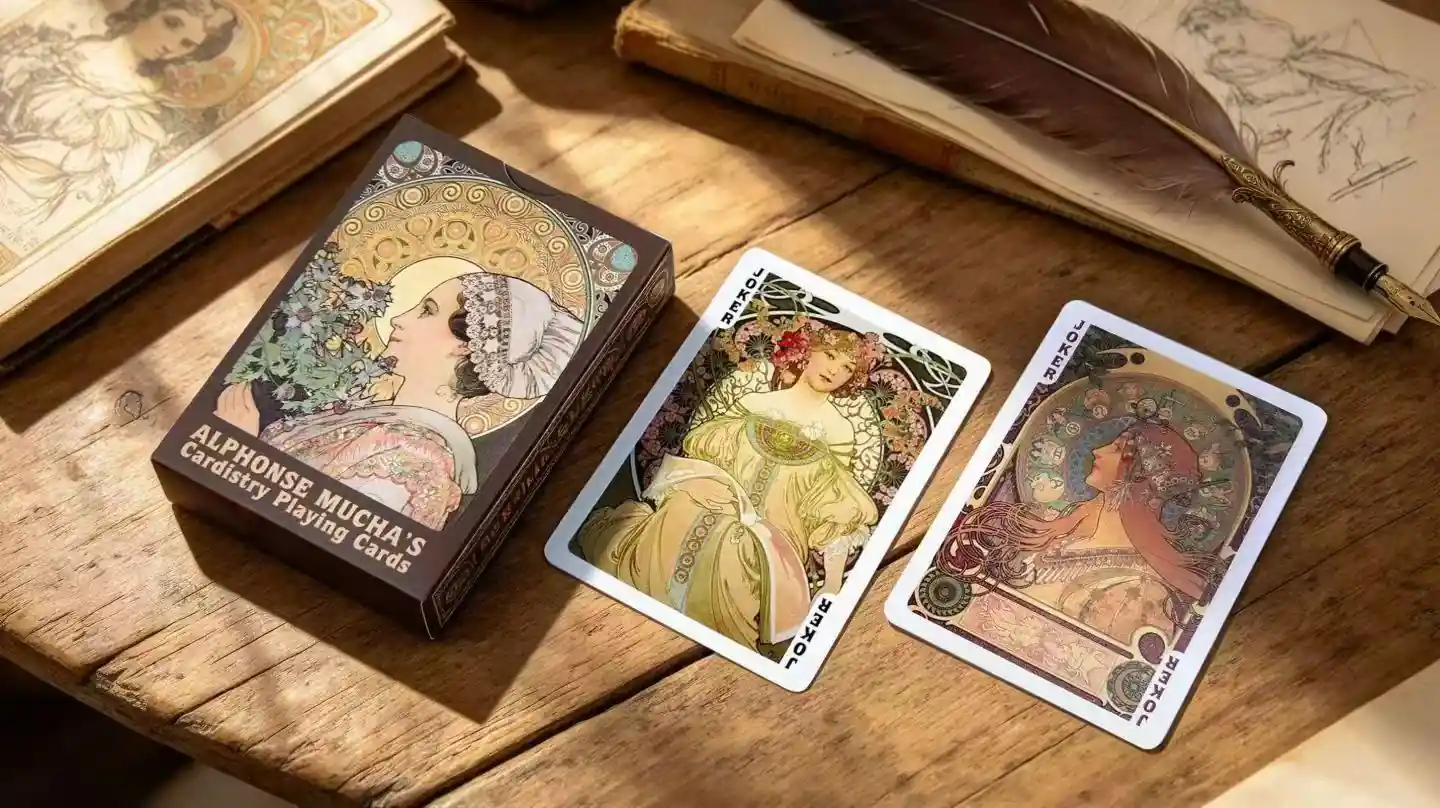
Linen texture and matte varnish
The surface finish supports the artwork
The linen pattern introduces fine highlights and shadows across both faces, giving the deck a tactile character that a flat sheet cannot show. Matte varnish tempers broad glare and adds a protective layer over the print. Together, they influence the appearance of contour lines, pale skin tones, decorative borders and dark backgrounds under changing light.
Approval should be based on a finished sample rather than a monitor or an unembossed press sheet. Only the completed card shows the combined effect of C2S paper, linen embossing, matte varnish, black-core ink and final cutting.
Specification matrix
What is confirmed, what it contributes and what still needs approval
| Confirmed parameter | Engineering contribution | Approval point |
|---|---|---|
| 300 gsm C2S paper | Provides the confirmed basis weight and coated printing surfaces on both sides. | Confirm finished caliper, stiffness, grain direction and handling with a physical sample. |
| Double-sided linen embossing | Adds a cloth-like tactile pattern to both card faces and changes how light breaks across the surface. | Check fine linework, small text, tonal transitions and texture consistency after embossing. |
| Matte varnish | Softens glare and protects the printed image. | Review gloss level, colour appearance, scuff resistance and edge condition. |
| Black-core ink layer | Improves opacity and reduces front-to-back show-through. | Inspect the finished card against strong backlighting and normal play conditions. |
| 63 × 88 mm | Offers a standard poker-size canvas for functional indices and decorative artwork. | Confirm corner radius, bleed, safe area and compatibility with the chosen packaging or sleeves. |
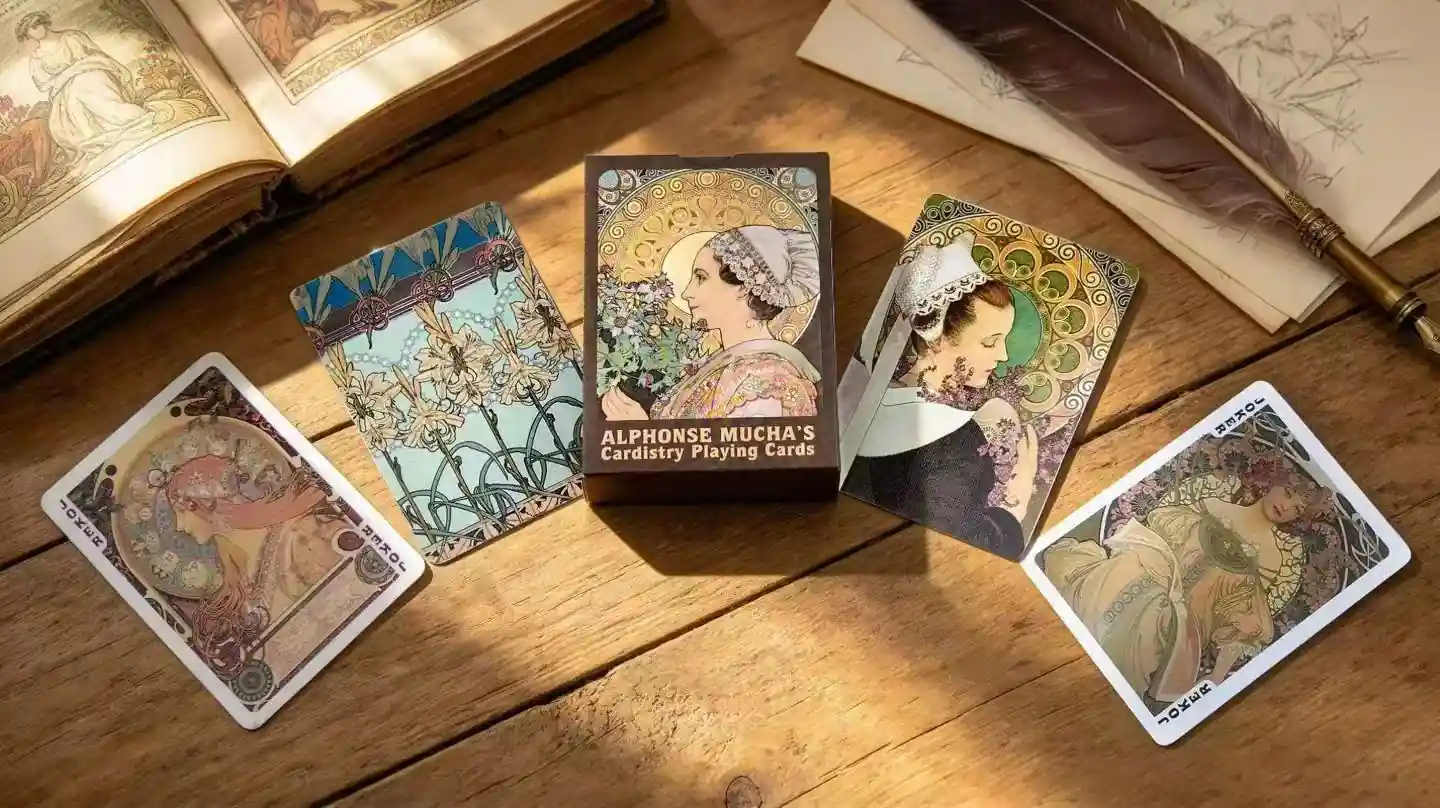
Application fit
Where this specification is most relevant
This construction fits projects where detailed illustration, a tactile linen surface, controlled reflection and reduced show-through need to work together.
- Illustrated collector decks with dense linework, portrait art and decorative borders.
- Artist and licensed cultural merchandise from buyer-owned or licensed artwork.
- Retail playing card projects that use a familiar 63 × 88 mm format and need coordinated face, back and box artwork.
- Branded presentation decks where glare control, opacity and hand feel are part of the brief.
The photos show packaging concepts only; packaging is specified and quoted separately.
Prepress and sample review
A practical approval sequence for ornate card artwork
Assess a decorative deck as a system, not as a single image. The checkpoints below keep aesthetic detail from being approved in isolation from the card’s construction. For the underlying production sequence, see the custom card OEM/ODM process.
1. Final-size artwork
Review portraits, borders, suit marks and fine text at 63 × 88 mm, including bleed and safe areas.
2. Colour proof
Check contrast at the focal point and the muted palette against the production colour target agreed for the project.
3. Stock sample
Review small details, perceived sharpness and stiffness on the actual 300 gsm C2S construction.
4. Surface review
Assess the double-sided linen embossing and matte varnish under direct and angled light, including tactile consistency and routine handling observations.
5. Opacity check
Inspect front-to-back show-through under lighting that reflects the intended use of the cards.
6. Fit and cut
Confirm finished size, corner radius, edge condition and fit with any separately specified packaging or sleeves.
Artwork rights: “Mucha-inspired” describes the visual direction shown in the supplied images. Before commercial production, the buyer should provide artwork that it owns, has licensed or is otherwise authorized to reproduce. Visual resemblance is not evidence of reproduction rights.
Technical FAQ
Art Nouveau playing card printing questions
Is 300 gsm the same as card thickness?
No. GSM is basis weight—the mass of one square metre of paper. Finished thickness and stiffness also depend on the paper construction, caliper, double-sided embossing, varnish and production tolerances.
What is the confirmed paper for this deck?
It is 300 gsm C2S paper with coated printing surfaces on both sides. The linen embossing, matte varnish and black-core ink treatment are separate parts of the finished construction.
Does this card use linen embossing?
Yes. A linen texture is embossed on both faces of the card. Fine details and tonal transitions should therefore be approved after embossing, not only on a flat press proof.
What does matte varnish do?
Matte varnish reduces glare and adds a protective layer over the printed surface. Without project-specific test data, it should not be described as scratch-proof, waterproof or fingerprint-proof.
What is the purpose of the black-core ink layer?
The specified black-core ink treatment improves opacity and reduces front-to-back show-through. Final opacity should still be checked on the completed card under the lighting expected in use.
Is 63 × 88 mm a golden-ratio card size?
No. It is a widely used poker-size format with balanced proportions, but it is not the mathematical golden ratio.
What should be proofed for Art Nouveau linework?
Proof fine contours, ornamental borders, pale tonal transitions, suit and rank indices, small text and details near the cut line at final size, then review them again after linen embossing and matte varnishing.
Planning an illustrated custom playing card deck?
Send the finished card size, artwork status, quantity, paper and finish requirements, plus any packaging or sleeve constraints. THRIWA can review the brief — including fine-line artwork like the pieces shown here — against the confirmed production specification before sampling.


