

Introduction: PVC polymer sheets and paper fiber decks wear in very different ways once a poker session stretches past a few hours of shuffling, bending, and spills.
Anyone who has sat through a long session knows the small annoyances that build up: a corner that refuses to lie flat, a card that feels soft after a drink gets knocked over, a face card that suddenly shows a thumb-shaped mark. These are material problems, not brand problems. A traditional deck is built from wood-pulp fibers pressed into a sheet, while a 100% PVC playing card is a sheet of plastic polymer. The two materials respond to bending, moisture, and friction on completely different terms, and once you understand how each one behaves, the feel differences at hour four of a session stop being a mystery.
Why Paper Fibers Soften While PVC Cards Keep Their Shape
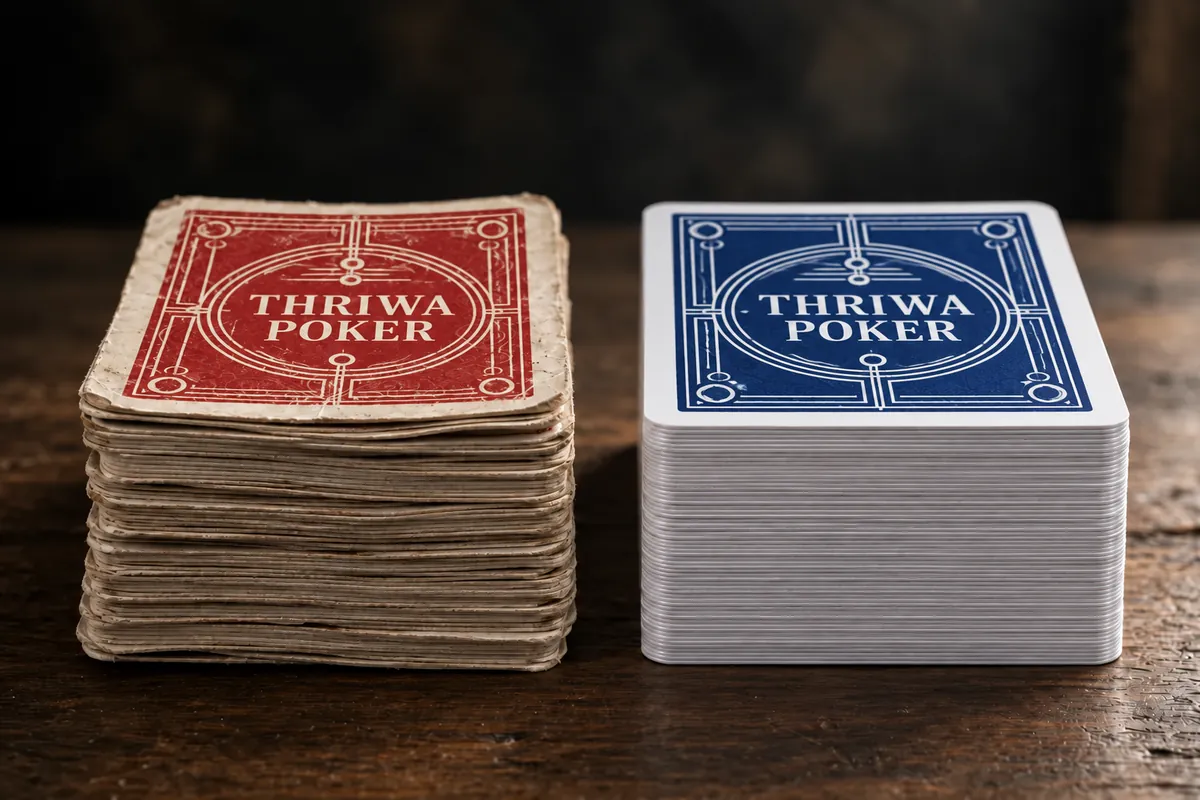
A paper playing card starts life as a tight network of cellulose fibers held together by hydrogen bonds, plus coatings and sizing that keep the surface printable. That network is strong when it is dry and flat, but it is also porous by design, and porosity is exactly what fails first in a long game. Bending a dry paper card pushes fibers past each other and crushes the bond structure along the fold line. Moisture does something worse, because water molecules can move into the fiber network itself. PVC behaves differently because there is no fiber network to saturate and no air pockets to fill. It is a thermoplastic polymer sheet, and its stiffness comes from long molecular chains that are entangled with each other rather than bonded into a rigid lattice.
1. Water Absorption Weakens Paper Fibers More Than PVC Polymer Bonds
When humidity climbs or a drink lands on the table, paper fibers take on water and swell. That swelling is never perfectly even, so a card can cup, ripple, or go limp in the middle while its edges stay stiff. The hydrogen bonds that held fibers together relax as water molecules crowd between them, which is why a damp paper deck feels softer and deals more like fabric than cardboard. Print layers on a coated card can also lift when the sheet swells underneath them. PVC absorbs essentially no water, so its stiffness barely changes from the first hand to the last. Water and oil stay on the surface instead of soaking in, which is why a PVC plastic poker playing card stays readable through a sweating hand or a spilled glass.
2. Elastic Recovery Helps PVC Cards Spring Back After Bending
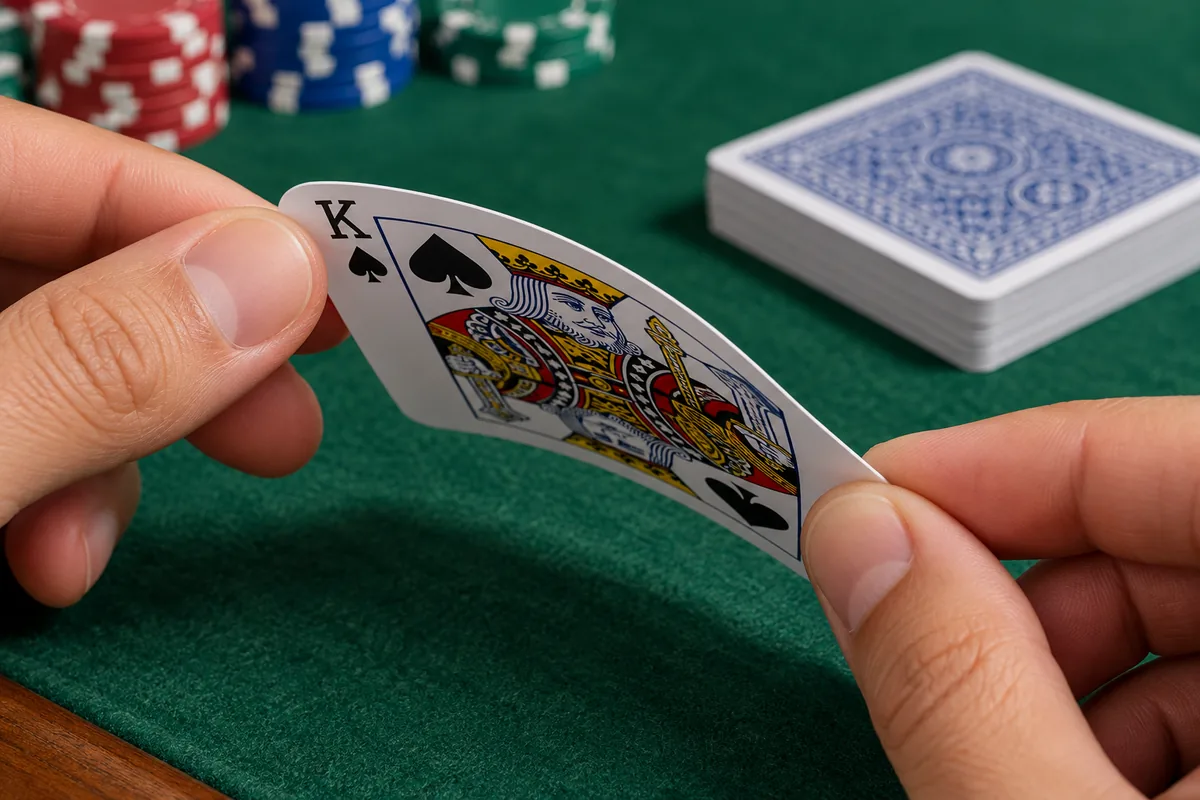
Polymer tensile testing describes what happens when a plastic sheet is pulled or bent: it deforms elastically first, then reaches a yield point where the deformation becomes permanent. Below that point, the long chains straighten and slide, and they return to their original arrangement when the force is removed. That is the mechanism behind the familiar crisp snap of a plastic deck. Bending a card to peek at a corner stretches the polymer inside the elastic range, and the card springs back the moment you let go. Paper fibers do not recover that way. Crushed fibers and re-formed hydrogen bonds hold the fold in place, which is how dog-eared corners appear after a single clumsy hand.
How Sweat, Drinks, and Table Friction Affect Card Surfaces
Sweat is the most underrated wear factor at a poker table. Across three or four hours, hands deposit oils and moisture onto every card in play, and paper absorbs both. The surface softens, printed areas can darken around the edges, and cards begin to cling to each other instead of sliding apart during a deal. PVC keeps those deposits on the outside. The waterproof and oil-resistant surface behavior means a wiped card still looks close to new, and the double-sided matte anti-slip coating gives fingers a consistent grip rather than the slick-then-sticky cycle paper goes through as it picks up moisture. In practice, that difference shows up as fewer dropped cards and fewer accidental flashes of a face card during a long session. Friction against the table matters just as much. Sliding a card across felt, wood, or a padded rail wears the edge in different ways, and paper edges fray and shed fiber once the coating along the border wears through. A PVC card has a non-porous edge that does not fray or bloom, and polished edges keep the deck profile clean, so cards glide across the felt with a predictable feel. Over a full evening, that consistency is what separates a deck that still handles well from one that has started to feel tired and uneven, with some cards sliding and others sticking.
What Long Poker Sessions Show About Material Fatigue in Both Deck Types
Fatigue is the useful word here. Every shuffle bends each card along its length, every deal flicks a corner, and every peek puts a small local crease in one spot on the card. Paper accumulates that damage in visible stages: the corners soften first, then the deck stops sitting square, then edges begin to fray and the print near the border dulls. There is no recovery stage, because the fiber network is being permanently rearranged, and once a corner has taken a set, nothing brings it back. A deck that started the night crisp often feels noticeably different by the last hand. A PVC deck runs the same number of cycles with a very different outcome. The polymer sheet has a much wider elastic range, so most everyday bends never reach the yield point and leave no lasting mark. The deck keeps its shape, cards still sit square, and the shuffle feel stays consistent from the first hand to the last. Heavy use does eventually show up as minor surface scuffs or a slight softening on the most handled cards, and one hard fold pressed flat across the middle of a card can still leave a mark, because that pushes the polymer past its limit. That is simply a different failure mode, and it is why plastic decks keep their playing character far longer in high-frequency play. Wear is not only about material. How often a deck is used, how rough the table surface is, and how players handle and store their cards all change how long any deck lasts. A deck used every night on a hard surface will age faster than one kept in a case and played on felt. Standard 63×88 mm poker size, flex, and surface feel are the physical traits that make plastic decks compatible with shufflers and dealer handling, and those traits tend to hold steady through months of play rather than weeks. For session players, that consistency is the real payoff.
Conclusion
Material family explains most of what players feel at the table. Paper fibers absorb moisture, swell, and hold creases because their bond structure changes permanently under bending and water. PVC polymer sheets resist water and oil, recover from ordinary bends, and keep a stable flex and surface grip through long sessions. That is why a 100% new PVC deck feels different at hour four than a paper deck does, and why the difference is predictable rather than a matter of luck. Buyers who want to see the material in a finished printed form can look at the Lord of Mysteries deck, shown as an OEM/ODM sample artwork with a matte anti-slip coating on both faces.
FAQ
Q: Why do 100% PVC playing cards feel different from paper cards during long poker sessions?
A: The difference comes from what each sheet is made of. Paper is a porous fiber network that softens, swells, and holds folds once it is handled and exposed to moisture, so its stiffness and glide change over an evening. PVC is a polymer sheet with a wide elastic range, so ordinary bending, dealing, and shuffling leave little permanent change. The deck keeps a similar flex, weight, and surface grip from the first hand to the last, which is what players notice most.
Q: How do water and sweat affect PVC playing cards compared with paper playing cards?
A: Paper absorbs both, and that absorption is what causes cupping, limpness, blistered print, and the tacky feel that makes cards cling together. PVC takes on essentially no water or oil, so the sheet keeps its stiffness and the printed face stays clear. A PVC deck's waterproof and oil-resistant surface keeps spills and hand moisture on the outside, where they can be wiped away. Its double-sided matte anti-slip coating also keeps grip consistent instead of changing as moisture builds up.
Q: Do PVC plastic poker cards lose their shape after repeated shuffling?
A: They keep their shape well under normal play. Repeated shuffling and dealing bend the sheet inside its elastic range, so the polymer returns to its original form and the deck stays square. A hard fold pressed flat across a card can still leave a mark, since that pushes the polymer past its yield point. Over long use, expect light surface scuffs rather than warping or dog-eared corners, and actual wear depends on play frequency, table surface, and handling.


