
Search History
468551767
Custom Printable Alphabet Picture Learning Flash Cards
Playing card plastic
playing card
oracle
You May Also Like
THRIWA Playing Card is a specialized industrial manufacturing base dedicated to the R&D, mass production, and custom OEM/ODM processing of premium playing cards, game cards, trading cards and related paper gaming products. Situated in the Guangdong-Hong Kong-Macao Greater Bay Area with mature supply chain infrastructure, the factory runs full automated end-to-end production lines, and strictly implements ISO 9001 quality management systems across all manufacturing nodes to deliver consistent, stable quality for both domestic and global clients, and also includes the following various certificates:ISO 14001, ISO 45001, BSCI, FSC.
2.Prepress & Raw Material PreparationPrepress Workflow
Our professional prepress team completes full DTP (desktop publishing) processing of customer-provided artwork files: color calibration, trapping adjustment, imposition into standard large-format parent sheets (typically 54/56 cards per sheet for standard poker decks), and digital electronic proofing before plate making. Every output proof is verified against customer requirements for color fidelity, text accuracy and register alignment, ensuring zero deviation before formal printing.
Cardstock Selection & Treatment
We exclusively use high-performance playing card dedicated pasteboard, which is dual-layer laminated with black/grey opacifying core adhesive sandwiched between two face sheets. This structure eliminates show-through from the reverse side, delivers ideal stiffness and flexibility, and guarantees perfect faro shuffle performance for professional use. Paper caliper ranges from 280PT to 330PT, with GSM controlled at 280–330g/m² according to product grade. All incoming raw stock passes strict flatness, moisture content and tensile strength inspection to avoid printing register errors and post-production warping.
3.Core Production Processes
Offset Printing
Our production runs are executed on high-precision Heidelberg offset printing presses, with 4-6 color printing stations and closed-loop color density control systems that maintain ΔE ≤ 2.0 color accuracy across the entire batch. The presses feature automatic sheet alignment, ink supply closed-loop feedback and anti-static suction delivery systems, ensuring consistent color, sharp edge definition and uniform ink layer thickness on every parent sheet.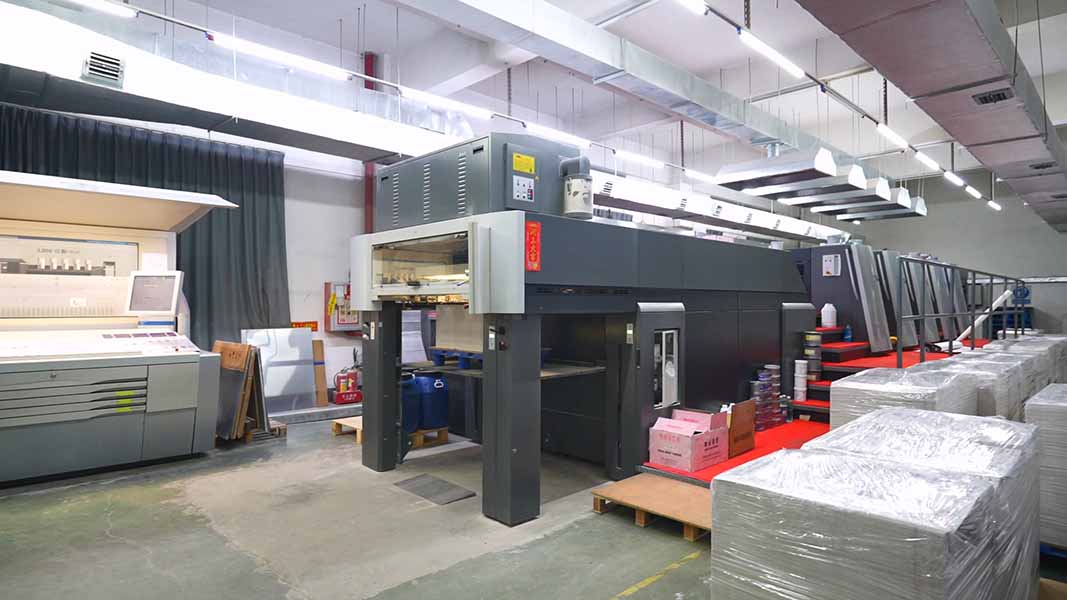
Post-Print Surface Finishing
After printing and full curing, all parent sheets go through dedicated surface treatment stations: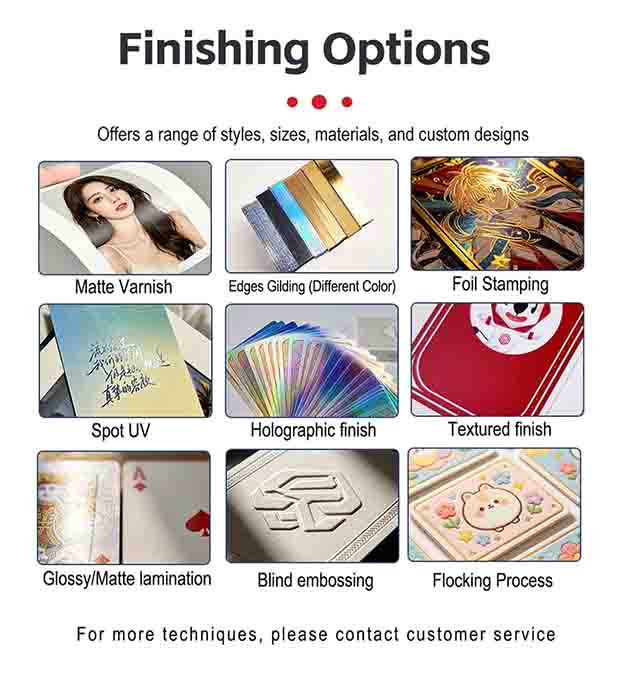
Aqueous Coating: Standard water-based matte/gloss coating applied across the full sheet to boost scratch resistance, anti-fouling performance and card sliding smoothness
UV Spot Varnishing: Custom localized UV highlight effect for specified art patterns, creating raised bright three-dimensional texture and distinct visual hierarchy
Lamination: Select products use extra PET/PP film lamination for added water resistance, wear resistance and long service life.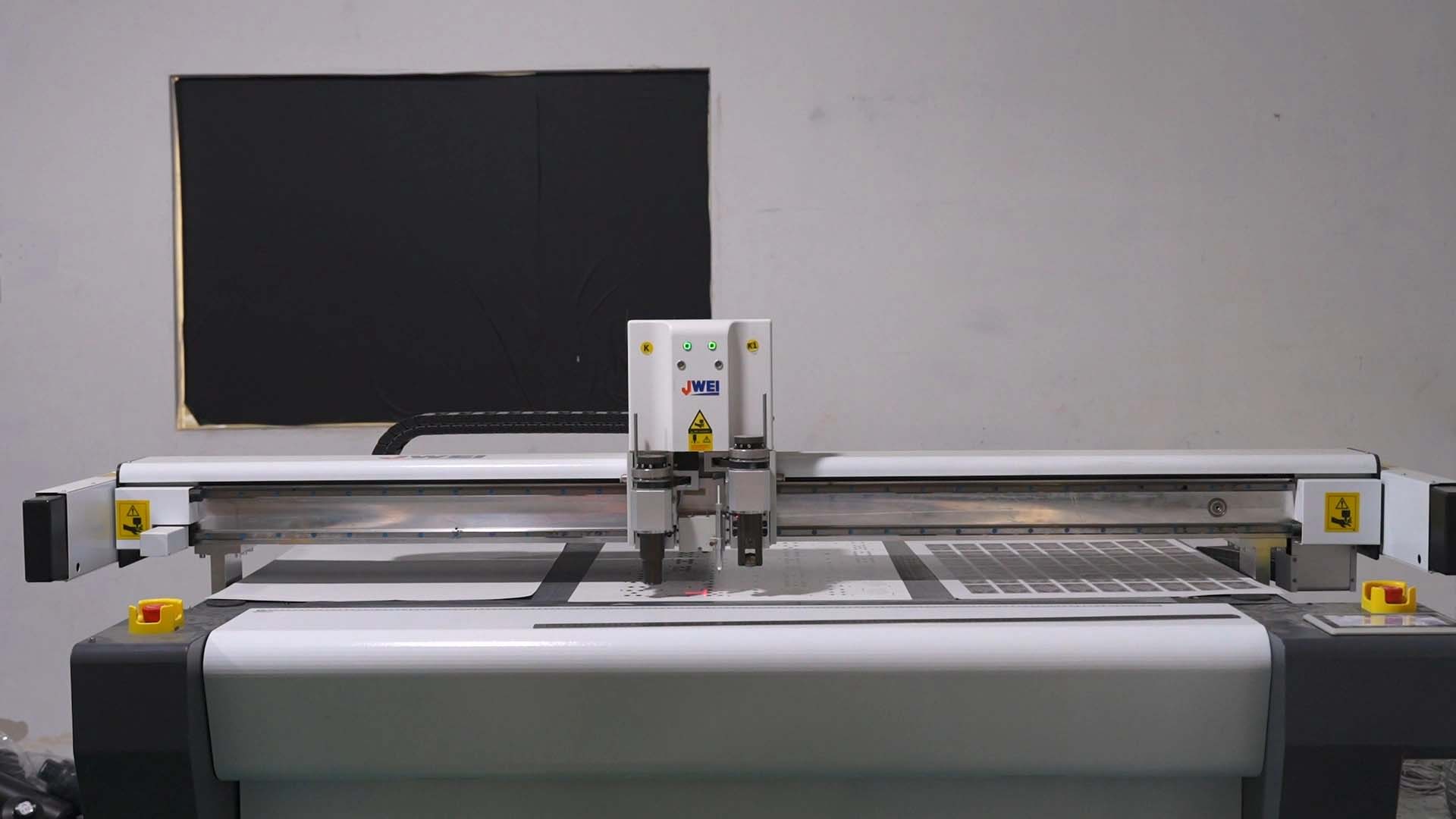
High-Precision Die Cutting
All finished coated parent sheets are fed to imported full-automatic rotary die-cutting machines, which use precision engraved die blades to perform one-time full-sheet punching. The process delivers accurate positioning, clean edges without burrs, and strict consistency for all individual cards. We support both Traditional Cut and Modern Cut configurations to meet different professional shuffling and handling habits. Immediately after die cutting, special automatic rounding machines process all four corners of each card to the standard R specification, eliminating sharp edges and significantly improving card durability, handling comfort and safety.
4.Automated Sorting & Strict Quality Control
All single cards after die cutting are conveyed to high-speed automatic card sorting machines, which complete full deck collation by automated counting and sequential ordering, with built-in visual inspection modules to automatically reject mis-cut cards, color deviation cards, ink-spot defective cards and missing-card decks. Our offline QC team performs a second-level full sampling inspection: covering register error check, corner rounding consistency verification, surface finish defect screening, and deck quantity double-check. The final qualified product yield rate is controlled above 99.5% before entering the packaging station.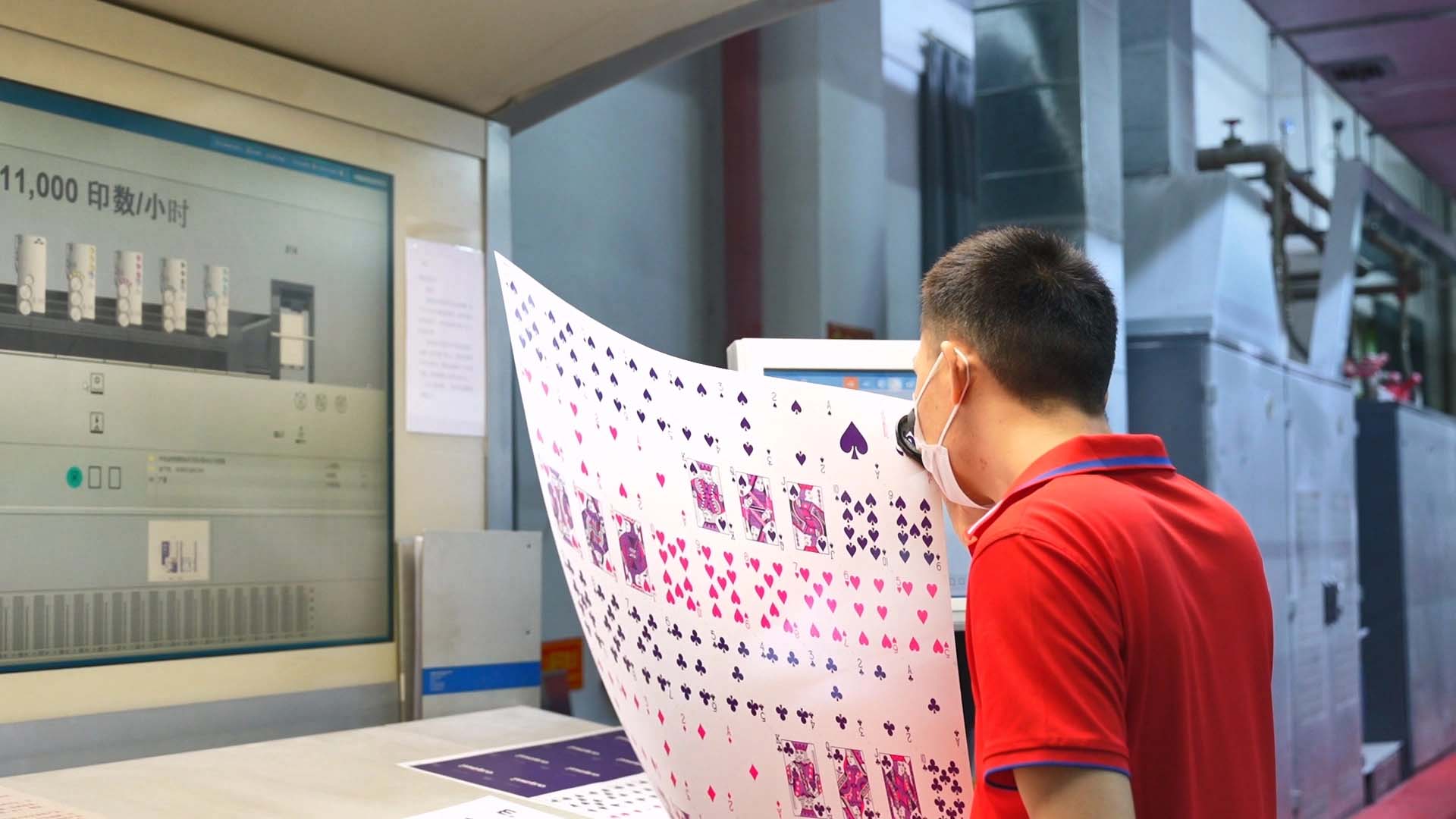
Qualified card decks are automatically inserted into custom-printed tuck boxes (which are independently die-cut, folded and glued on our in-house carton production line), then batch packed into outer corrugated cases with standard shipping marks. We support custom inner wrapping, cellophane overwrapping, sealing sticker application and other personalized packaging requirements according to client specifications, ensuring products are in perfect condition when reaching end customers.
6.Quality Assurance CapabilityThe factory establishes full process traceability from incoming raw material lot number, printing production batch number to finished product outbound serial number. We also maintain dedicated anti-slip performance test, card bending resistance fatigue test and temperature/humidity adaptability test laboratories to verify that every batch of products meets the strict durability and handling requirements for long-term mass use in casinos, board game clubs, family entertainment and commercial promotion scenarios.
7.Final Packaging & ShipmentAutomatically collate and insert playing cards into custom tuck boxes, apply sealing cellophane wrapping, and add barcodes or labeling as required by the order.
Stack the finished decks into shipping cartons, and prepare them for domestic distribution or overseas export.
With fully automated end-to-end production lines, the factory ensures high consistency, stable quality and fast turnaround for both standard retail decks and fully customized playing card orders.
Please feel free contact THRIWA to explore our collection for a tailored custom solution and expand your local business,Your Vision, Our Professional — THRIWA POKER makes the customization of professional playing cards easier and more reliable.
Thriwa– Your Trusted Custom Card Printing & Packaging Partner
The total cost largely depends on your order, such as the number of cards and the complexity of the packaging.For a standard deck of 54 cards, the cost per deck is typically between $1.00 and $5.00 when mass-producing 1000 decks or more.Smaller batches of digital printing are more expensive, but require smaller initial order quantities.
Additionally, factors such as custom packaging, special surface treatments, and the choice of card game manufacturer will all affect the final quote.
Yes. We can discuss guidebooks, instruction cards, inserts and box formats as part of the complete deck project.
Matte coating offers a premium feel and less reflection, while glossy coating provides higher color saturation.
The choice depends on the theme and usage requirements.
Yes. Our team can review basic print setup requirements such as size, bleed, color mode and file format before production.
We recommend using 310gsm or 330gsm black core cardstock. The black core prevents light from penetrating the cardstock, ensuring players cannot see the front of the cards during battles or gameplay. If you want to enhance the value of your custom trading cards in competitive collecting, you can add a linen texture, bringing the classic "click" sound and premium feel commonly found in top-tier games.
To protect your project and design ideas:
Apply for copyright for your manuals and designs: This protects your unique interpretation of game design and ideas.
Register trademarks for your game product names: This prevents others from using your game names and trademarks in the market.
Sign confidentiality agreements: Sign confidentiality agreements when working with board game card manufacturers, suppliers, or illustrators to provide protection during the development phase.
Absolutely, we strongly recommend that you do this.
Most professional factories can provide digital proofing or single-piece physical sample services. A "pre-production sample" allows you to verify the card's quality, color accuracy, and design layout before committing to the entire offset printing order. It's the last line of defense before mass production, identifying problems or design flaws before producing thousands of cards, ensuring the batch of products is error-free.


